
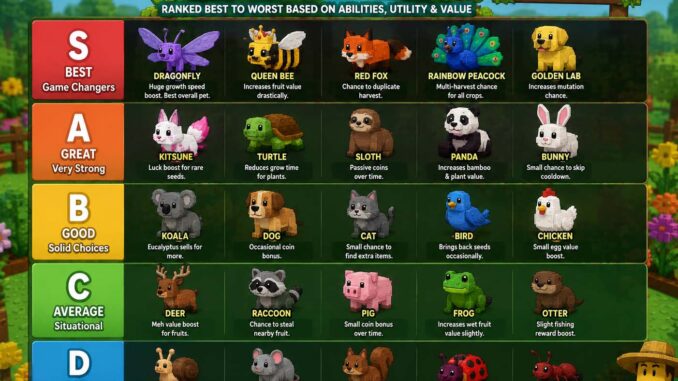
Picking the right pet in Grow a Garden can improve your farming strategy and help you make better use of your resources. This grow a garden pets tier list compares companions by their potential usefulness, early-game value, farming support, and long-term investment potential. Since each pet serves a different purpose, the best choice depends on your progress and the abilities available in your collection.
Pet rankings can change when developers introduce new companions or adjust existing abilities. Therefore, treat these tiers as a practical starting point rather than a guaranteed ranking for every update. Before spending valuable resources, check each pet’s current in-game ability and decide whether it supports your farming goals.
Grow a Garden Pets: Complete Tier Rankings
The following table organizes the pets from your original list according to their proposed overall usefulness. These rankings are general recommendations, not verified measurements of every pet’s current performance.
| Tier | Pets | General recommendation |
|---|---|---|
| S Tier | Dragon, Phoenix, Golden Bee, Mythical Butterfly | High-priority choices if their abilities suit your strategy |
| A Tier | Bee, Owl, Fox, Fairy | Strong alternatives for developing players |
| B Tier | Rabbit, Turtle, Deer, Penguin | Situational companions for progression |
| C Tier | Dog, Cat, Chicken | Potential early-game options |
| D Tier | Starter pets and low-value companions | Consider replacing when a better option becomes available |
Your results may differ because of pet levels, abilities, garden setups, and game updates. Moreover, a lower-ranked companion can still be useful when its ability complements your current strategy.
Best Grow a Garden Pets in S Tier
These companions occupy the highest positions in this proposed ranking. However, evaluate their actual abilities before investing heavily in any individual pet.
Dragon: A High-Value Companion
Dragon appears in the top tier because the original ranking identifies it as a potentially valuable long-term companion. Before upgrading it, check which benefits it currently provides and how those effects support your garden.
Consider Dragon when:
- Its ability improves your main farming objective.
- Its performance justifies the resources required to level it.
- It complements the other pets you use regularly.
Therefore, prioritize its actual contribution over rarity or appearance alone.
Phoenix: A Strong Pet to Consider
Phoenix is another proposed S-tier choice. Its value depends on its current in-game ability and how frequently that ability helps your farming routine.
For example, compare its practical benefits with those of the pets you already own. If another companion provides more useful support, that alternative may deserve your resources instead.
Golden Bee: Farming Potential
Golden Bee ranks highly in the original list because of its proposed farming value. However, verify its current ability rather than assuming that its name or rarity guarantees better performance.
In particular, consider whether its benefits justify using a pet slot that could support another strategy. If the results suit your garden, it may be worth keeping in your active collection.
Mythical Butterfly: Utility and Progression
Mythical Butterfly rounds out this proposed top tier. Its usefulness depends on its current mechanics, level, and your preferred approach to farming.
Before investing, compare its benefits with those of your other high-value companions. A pet that directly supports your goals can be a better choice than one that simply occupies a high tier on a general list.
A-Tier Grow a Garden Pets for Progression
A-tier companions offer alternatives when you do not own the pets in the highest category. They can also remain useful when their abilities fit a particular setup.
Bee: A Practical Choice
Bee is an option to evaluate while building your collection. Its current ability matters more than a simple comparison with Golden Bee.
If you are researching how to obtain or hatch one, this guide to bee egg grow a garden may help you explore the related egg.
Before spending resources, compare Bee’s benefits with those of your existing companions. You may find that keeping a familiar pet makes more sense than replacing it immediately.
Owl: A Balanced Alternative
Owl belongs in the proposed A tier because it can serve as an alternative to higher-ranked choices. Nevertheless, its value depends on the role it performs and the benefits you receive from using it.
Compare its ability with your current farming needs. If it provides useful support, keep it until you find a replacement that offers a clear improvement.
Fox: A Useful Progression Option
Fox is another option worth evaluating during progression. Its position should depend on its current ability rather than an assumption that every Fox provides the same benefits.
Check its performance in your garden and compare it with other available pets. As a result, you can make a more informed decision about whether to retain or replace it.
Fairy: Long-Term Collection Value
Fairy completes this tier in the original ranking. Consider it when its current effects complement your collection or help with a specific farming objective.
However, do not spend valuable upgrade materials solely because a pet appears in A tier. First, confirm that its ability provides enough practical value to justify the investment.
Grow a Garden Pets for Mid-Game Progression
B-tier companions may help fill gaps in your collection. Their usefulness depends on what you have unlocked and whether their abilities address your current needs.
Rabbit: An Early Collection Option
Rabbit can serve as a temporary companion while you develop your collection. Its long-term value depends on its current ability and how well that ability supports your farming routine.
Therefore, keep it when it provides a useful benefit. Replace it when another pet offers a clear advantage for the same role.
Turtle: A Situational Companion
Turtle is worth evaluating for the specific benefits it provides. Rather than assuming that it improves survival or farming, check its current in-game description.
If its ability fits your setup, it may remain useful even after you unlock rarer companions.
Deer: A Pet for Your Current Needs
Deer is another possible progression option. Compare its effects with the needs of your garden before deciding whether to invest in it.
For example, if a different pet supports your main goal more effectively, saving your resources for that alternative may be the smarter move.
Penguin: Evaluate Its Current Ability
Penguin rounds out this proposed tier. Its actual value depends on its current mechanics and whether it performs a useful role in your collection.
Keep it if it contributes something your other pets cannot provide as effectively. Otherwise, consider replacing it when a stronger alternative becomes available.
C-Tier Grow a Garden Pets for Beginners
C-tier companions may be suitable for beginners, but their ranking does not mean that every player should replace them immediately.
Dog: A Starting Companion
Dog can be a temporary option while you learn the game’s systems and build your first collection. Check its current ability to determine whether it contributes meaningfully to your progress.
Once you obtain another pet, compare their benefits before deciding which one deserves your available slot.
Cat: A Pet to Reassess Later
Cat occupies the same general category in this ranking. Its usefulness depends on its current ability, level, and compatibility with your farming strategy.
However, avoid replacing it simply because it appears in C tier. A replacement should provide a practical improvement.
Chicken: Compare Its Benefits
Chicken rounds out this category. Before investing in upgrades, examine its ability and compare the expected benefit with other pets you own.
If another companion supports your goals more effectively, redirecting future resources may make sense.
When to Replace Lower-Tier Garden Pets
The lowest tier represents starter companions and pets that may offer limited value for a particular player’s strategy. It does not mean every low-rarity pet is useless.
Consider replacing a pet when:
- Its ability no longer supports your main objective.
- Another companion offers a meaningful improvement.
- Its upgrade costs outweigh the benefits you receive.
- You have a better option available for the same role.
On the other hand, keep a lower-tier pet if it provides a unique benefit or fills a gap in your collection. The right decision depends on practical performance, not the tier label alone.
What Makes Grow a Garden Pets Strong?
A useful ranking should consider more than rarity. Several factors can help you compare companions fairly.
How Pet Abilities Improve Farming
First, identify what each pet actually does. Some abilities may support crop growth, while others may focus on mutations, collection, or different aspects of gameplay.
Next, decide which benefit matters most to your garden. A pet that supports your current objective can be more useful than one with a generally impressive reputation.
Consistency and Practical Use
An ability’s practical value depends on how it works during normal gameplay. Therefore, consider its activation conditions, frequency, and impact instead of relying on a short demonstration or a pet’s name.
If possible, compare similar pets under the same conditions. This approach gives you a more meaningful basis for choosing between them.
Long-Term Investment
Some companions may remain useful as your collection develops, while others may suit only a specific stage or activity.
Before spending upgrade materials, ask yourself:
- Will this pet still help with my current goals later?
- Does it offer something my other companions lack?
- Is the investment worthwhile compared with available alternatives?
These questions help you avoid unnecessary upgrades and focus on pets that provide practical benefits.
Getting More Value From Pet Upgrades
Upgrading a pet makes sense when the improvement justifies the cost. However, do not assume that every level produces an equally valuable benefit.
Check the current mechanics, compare the available alternatives, and invest gradually when you are uncertain.
Choosing Grow a Garden Pets as a Beginner
New players do not need to chase the rarest companions immediately. Instead, focus on understanding the game and building a collection that supports steady progress.
Follow these steps:
- Start with what you have. Learn each available pet’s ability before spending resources.
- Choose a clear goal. Decide whether you want to improve crop production, pursue mutations, or support another activity.
- Upgrade selectively. Invest in pets that offer useful benefits rather than upgrading every companion.
- Compare new additions. Check whether a newly acquired pet improves your current setup.
- Save valuable resources. Avoid expensive upgrades when you expect to replace a companion soon.
As your collection expands, adjust your strategy to match the abilities you unlock.
Grow a Garden Pets by Game Stage
Your priorities can change as you progress. Therefore, evaluate your collection based on your current needs rather than following one fixed lineup.
Early-Game Options
At the beginning, focus on learning pet abilities and building a reliable collection. Bee, Rabbit, Dog, and Cat appear in the original ranking as potential early options.
However, use the companions you actually own and choose the ones that provide useful benefits. You do not need to obtain every pet listed in this category.
Mid-Game Options
As your collection grows, compare alternatives such as Owl, Fox, Deer, and Turtle. At this stage, you can start replacing companions that no longer fit your strategy.
In addition, understanding grow a garden trade values can help you research the collectible market. Remember that trading value and farming usefulness are different measures.
Late-Game Options
Later in the game, focus on building a collection around specific goals. Dragon, Phoenix, Golden Bee, and Mythical Butterfly are the original list’s top-tier suggestions.
Nevertheless, verify their current abilities before treating them as the best choices. A different companion may offer more value for your particular setup.
Best Pets for Farming in Grow a Garden
If your main goal is improving farming results, compare pets by their actual contribution rather than their position on a general tier list.
The following table presents a shortlist from the original article, not a verified performance ranking.
| Pet | Original proposed rank | What to evaluate |
|---|---|---|
| Dragon | S | Current ability and practical farming benefit |
| Golden Bee | S | Value compared with other available companions |
| Phoenix | S | Ability usefulness and investment requirements |
| Mythical Butterfly | S | Compatibility with your farming strategy |
| Bee | A | Benefits compared with your current pets |
For a fair comparison, evaluate pets under similar conditions. Also, consider whether their abilities complement one another or compete for the same role.
Upgrading Your Grow a Garden Pets
Usually, you should prioritize upgrades that provide a meaningful improvement. However, a lower-ranked pet can still justify an investment if it performs a role your other companions cannot handle.
Before upgrading, consider the following:
- Keep resources available for promising new pets.
- Compare the benefits of each upgrade.
- Avoid investing heavily in a pet you rarely use.
- Retain useful specialists when they support your strategy.
As a result, you can build a more flexible collection without spending resources on every companion.
Common Grow a Garden Pet Mistakes
Upgrading Every Companion
Upgrade costs can compete with other priorities. Therefore, focus on the pets that contribute most to your current goals.
Judging Pets Only by Rarity
A rare pet is not automatically the best choice for every situation. Instead, compare its actual ability with those of your alternatives.
Replacing Pets Without Comparing Them
A familiar, upgraded companion may still provide more value than a new pet. Check the benefits first rather than switching immediately.
Chasing Every Limited Pet
Limited availability does not guarantee long-term usefulness. Before spending currency, evaluate the pet’s current abilities and the role it would play in your collection.
For players exploring additional collectibles, this guide to primal egg grow a garden provides a related resource.
Smart Ways to Build Your Collection
A balanced collection develops through careful decisions rather than constant upgrades. For example, you can:
- Complete available quests and activities.
- Participate in events when their rewards suit your goals.
- Save premium currency for worthwhile opportunities.
- Compare pet abilities before choosing an upgrade.
- Review your collection as your needs change.
- Research trading options before exchanging valuable companions.
Additionally, learning about grow a garden trade can help you make more informed decisions about collectible exchanges.
Always check current in-game information before making an expensive trade or investment.
How Updates Affect Grow a Garden Pet Rankings
Yes. New pets, balance adjustments, and seasonal content can change which companions offer the most value.
Therefore, revisit your strategy when a major update changes an ability or introduces a new option. A pet that once suited your garden may become less useful, while another may become a better fit.
For official game information, visit the Grow a Garden page on Roblox. Use the live game to confirm current abilities and availability before making important decisions.
Grow a Garden Pets: Frequently Asked Questions
What Is the Best Pet in Grow a Garden?
There is no single best pet for every situation. The strongest choice depends on its current ability, your farming goal, and the other companions in your collection. Compare practical benefits instead of relying exclusively on a general ranking.
Which Pets Are Best for Beginners?
The original ranking suggests Bee, Rabbit, Owl, and Fox as possible collection options. However, the best starting companion is the one you can obtain and use effectively with your current resources.
Should I Spend Premium Currency on Pets?
Spend carefully. First, consider the potential benefits, your current resources, and whether the purchase supports your goals. Avoid spending premium currency simply because a pet appears in a high tier.
Are Rare Pets Always Better?
No. Rarity alone does not determine practical usefulness. A more accessible companion may suit your strategy better if its ability provides the benefits you need.
How Often Should I Check Pet Rankings?
Review rankings after major updates, new pet releases, or significant ability changes. In the meantime, use your own results and the current in-game descriptions to guide your decisions.
Quick Tier List Summary
The original ranking places Dragon, Phoenix, Golden Bee, and Mythical Butterfly in S tier, followed by Bee, Owl, Fox, and Fairy in A tier. Rabbit, Turtle, Deer, and Penguin occupy B tier, while Dog, Cat, and Chicken appear in C tier. Starter pets and other lower-value companions fill D tier.
Use these rankings as a starting point, not a universal rule. The most effective collection is one that supports your current farming goals, makes sensible use of upgrade resources, and adapts when the game changes.