
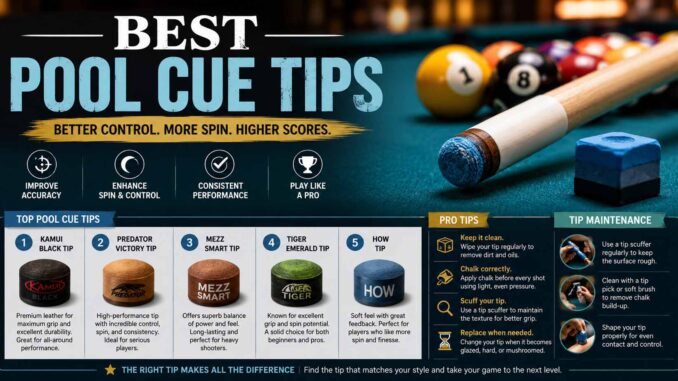
Finding the best pool cue tips can make a noticeable difference in your game. While the cue itself gets most of the attention, the tip is the only part that actually touches the cue ball. Its hardness, material, and condition affect spin, accuracy, control, and consistency on every shot.
Whether you’re just starting out or competing in local tournaments, choosing the right cue tip helps you develop better technique and greater confidence at the table. This guide explains the different tip types, compares popular options, and helps you decide which one best fits your playing style.
Why Pool Cue Tips Matter
A cue tip transfers energy from your cue to the cue ball.
Although it measures only a few millimeters thick, it influences:
- Ball control
- Spin generation
- Shot consistency
- Feel during impact
- Cue ball accuracy
Even experienced players often upgrade their cue tip before replacing the entire cue.
Best Pool Cue Tips by Playing Style
No single cue tip is perfect for everyone.
Here’s a quick comparison.
| Player Type | Recommended Tip Hardness | Main Advantage |
|---|---|---|
| Beginner | Medium | Balanced performance |
| Casual player | Medium | Easy control and durability |
| Spin-focused player | Soft | Maximum cue ball grip |
| Break specialist | Hard | Power and longevity |
| Tournament player | Medium-Hard | Consistent feedback |
For most players, a quality medium tip offers the best balance between spin and durability.
Soft vs. Medium vs. Hard Cue Tips
Understanding hardness is the first step toward selecting the right tip.
Soft Tips
Soft tips compress more during impact.
Advantages:
- Excellent spin
- Better cue ball grip
- Softer feel
- Easier draw and follow shots
Disadvantages:
- Wear faster
- Need reshaping more often
- Require frequent maintenance
These are popular among advanced players who rely heavily on cue ball control.
Medium Tips
Medium tips remain the most popular option worldwide.
Advantages:
- Balanced performance
- Good spin
- Reliable durability
- Suitable for all skill levels
Many instructors recommend medium tips because they are forgiving while still offering excellent control.
Hard Tips
Hard tips compress very little.
Advantages:
- Long lifespan
- Consistent shape
- Strong power transfer
- Less maintenance
Disadvantages:
- Produce less spin
- Feel firmer on contact
Break cues commonly use harder tips because maximum power matters more than finesse.
What Are the Best Pool Cue Tips?
When players ask, what are the best pool cue tips, the answer depends on playing preference rather than a single brand.
Several manufacturers have built excellent reputations over the years.
Popular choices include:
- Kamui
- Moori
- Zan
- Tiger
- Navigator
- Elk Master
- Triangle
Each brand produces tips with different hardness levels, making it easier to match your personal style.
Best Cue Tips for Pool Beginners
New players should avoid choosing the softest or hardest options immediately.
A medium layered tip offers:
- Better forgiveness
- Consistent performance
- Easier maintenance
- Good spin without excessive wear
Developing solid fundamentals matters more than chasing professional-level equipment.
Just like learning how to play darts starts with mastering accuracy before advanced techniques, pool players improve fastest by focusing on consistent mechanics instead of relying on specialized gear.
Best Pool Cue Tips for English
If you frequently apply side spin, you’re probably interested in the best pool cue tips for English.
English requires the cue tip to grip the cue ball effectively.
Good choices include:
- Soft layered tips
- Medium layered tips
- High-friction premium leather tips
These options generally allow players to generate more controlled sidespin while reducing the chance of miscues.
Keep in mind that proper chalk application and accurate cue delivery remain just as important as the tip itself.
Single-Layer vs. Layered Cue Tips
Another decision involves construction.
Single-Layer Tips
These tips use one piece of leather.
Benefits:
- Affordable
- Traditional feel
- Easy replacement
They work well for recreational players.
Layered Tips
Layered tips combine multiple leather layers under pressure.
Benefits include:
- Longer lifespan
- Better shape retention
- Consistent performance
- Improved quality control
Although they cost more, many serious players prefer layered designs.
Best Glue for Pool Cue Tips
Replacing a tip requires reliable adhesive.
When searching for the best glue for pool cue tips, cyanoacrylate (CA) glue is the most common recommendation among cue repair professionals.
A quality CA glue offers:
- Fast curing
- Strong bond
- Easy application
- Long-lasting performance
Use only a small amount during installation, and allow adequate curing time before shaping the new tip.
How to Choose the Right Cue Tip
Consider several factors before making a purchase.
Your Skill Level
Beginners benefit from forgiving medium tips.
Intermediate players may experiment with softer or harder options depending on playing style.
Playing Frequency
Frequent players often appreciate durable layered tips.
Occasional players may find single-layer leather perfectly adequate.
Preferred Shot Style
Ask yourself:
- Do I use lots of spin?
- Do I prefer powerful shots?
- Do I prioritize consistency?
Your answers narrow the choices quickly.
Common Mistakes When Buying Cue Tips
Many players assume expensive automatically means better.
Instead, avoid these mistakes:
- Choosing the hardest tip without experience
- Ignoring maintenance requirements
- Buying based only on professional endorsements
- Installing the wrong tip diameter
- Neglecting regular shaping
Matching the tip to your own game usually produces better results than copying another player’s equipment.
Maintaining Your Cue Tip
A quality tip lasts longer with proper care.
Maintenance checklist:
- Shape the tip regularly.
- Scuff lightly when needed.
- Apply chalk before every shot.
- Avoid excessive moisture.
- Inspect for cracks or flattening.
- Replace worn tips before performance suffers.
Regular maintenance keeps cue ball contact predictable.
Does Equipment Matter More Than Skill?
Equipment certainly helps, but practice matters far more.
Strong fundamentals include:
- Consistent stance
- Smooth stroke
- Proper bridge
- Accurate aim
- Good cue ball control
Much like studying chess strategies for beginners, improving your decision-making and technique often produces greater gains than upgrading equipment alone.
The best players combine quality gear with disciplined practice.
Cue Tip Comparison
| Feature | Soft | Medium | Hard |
| Spin | Excellent | Very Good | Moderate |
| Durability | Low | Good | Excellent |
| Maintenance | High | Moderate | Low |
| Feel | Soft | Balanced | Firm |
| Best For | Position play | Most players | Break shots |
This comparison helps narrow your choices based on your priorities.
Frequently Asked Questions
How often should I replace a pool cue tip?
Most recreational players replace a tip every one to three years, depending on playing frequency and maintenance. Competitive players may replace them more often.
Are layered tips worth the extra cost?
For players who compete regularly or practice often, layered tips usually offer better consistency and durability. Casual players may be perfectly satisfied with quality single-layer tips.
Can beginners use soft cue tips?
Yes, although medium tips generally require less maintenance and provide a more balanced learning experience.
What’s the best tip hardness for most players?
Medium hardness remains the safest recommendation because it combines spin, control, durability, and predictable feedback.
Does replacing the cue tip improve performance?
A fresh, properly installed tip can improve consistency, especially if the previous tip was worn, hardened, or misshapen.
Practice Makes Every Cue Tip Better
Even the best equipment can’t replace solid fundamentals. Spend time developing a repeatable stroke, accurate aiming, and consistent cue ball control before worrying about premium accessories. As your skills improve, you’ll better understand which cue tip characteristics suit your style.
Along the way, remember that games like pool reward patience, concentration, and strategic thinking. Many of the same mental skills are also highlighted in discussions about the benefits of puzzles, making billiards an enjoyable way to challenge both your precision and your decision-making. With the right cue tip and regular practice, you’ll gain more confidence every time you step up to the table.