
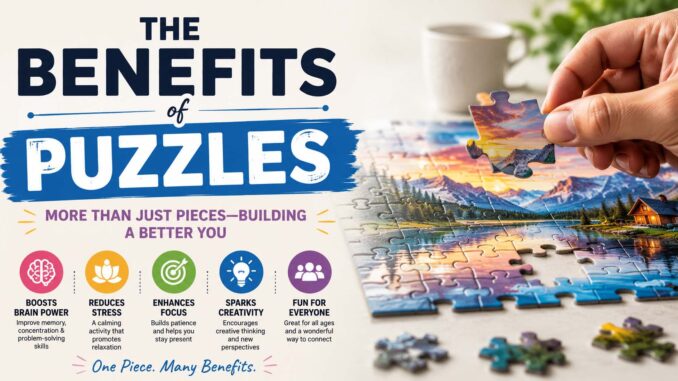
The benefits of puzzles go far beyond passing the time. Whether you’re solving a Sudoku, completing a jigsaw puzzle, mastering a logic game, or tackling challenging puzzles in modern video games, you’re training skills that directly improve your performance as a player. Better memory, quicker decision-making, stronger pattern recognition, and improved concentration are just a few of the advantages.
If you’ve ever wondered why puzzle games remain popular year after year, the answer is simple: they challenge your brain in ways that many other genres cannot.
Benefits of Puzzles for Every Type of Gamer
Puzzle games appeal to casual players and competitive gamers alike because they reward thinking rather than fast reflexes alone.
Instead of relying purely on reaction speed, puzzles encourage players to:
- Analyze situations carefully
- Spot hidden patterns
- Think several moves ahead
- Stay calm under pressure
- Learn from mistakes
These same skills transfer into strategy games, RPGs, MOBAs, shooters, and even tabletop games.
Why Puzzle Games Improve Gaming Performance
Many successful gamers regularly play puzzle games between competitive sessions.
The reason is simple: puzzles strengthen mental habits that appear in nearly every genre.
Better Pattern Recognition
Games constantly present recognizable patterns.
Examples include:
- Enemy attack animations
- Boss mechanics
- Loot routes
- Resource management
- Tactical positioning
Puzzle games teach your brain to recognize these patterns faster.
Stronger Problem-Solving
Every puzzle asks a simple question:
“What is the best solution?”
That mindset carries over into games where players constantly adapt to unexpected situations.
Whether you’re escaping a difficult dungeon or planning the perfect strategy, creative thinking becomes a valuable skill.
Improved Concentration
Many puzzles require sustained attention.
Instead of rushing, players learn to focus on one objective at a time.
That concentration often translates into fewer mistakes during longer gaming sessions.
Benefits of Doing Puzzles Beyond Gaming
The benefits of doing puzzles extend well outside video games.
Regular puzzle solving may help improve:
- Memory
- Attention span
- Logical reasoning
- Patience
- Mental flexibility
- Spatial awareness
Although puzzle games aren’t a substitute for education or professional cognitive training, they provide an enjoyable way to keep your brain active.
Benefits of Puzzles for Competitive Players
Competitive gaming demands quick thinking and efficient decision-making.
Puzzle games naturally reinforce many of these abilities.
Faster Decision Making
When solving puzzles, players often evaluate several possible outcomes before choosing one.
This habit becomes valuable in games where every second matters.
Better Adaptability
No two puzzles are exactly alike.
As a result, players become more comfortable adjusting their strategy whenever new challenges appear.
This flexibility is useful in multiplayer games where opponents constantly change tactics.
Improved Resource Management
Many puzzle games reward careful planning instead of immediate action.
The same principle appears in strategy games where every resource matters.
Chess, Logic Games, and Strategic Thinking
Traditional strategy games share many qualities with puzzle games.
For example, learning chess strategies for beginners introduces concepts such as planning ahead, controlling space, and predicting an opponent’s response. Those same ideas appear in countless modern strategy and tactical games.
Because of this overlap, many players enjoy alternating between chess and digital puzzle games.
Benefits of Jigsaw Puzzles
Among all puzzle types, jigsaw puzzles remain one of the most relaxing.
The benefits of jigsaw puzzles include improvements in:
- Visual memory
- Shape recognition
- Attention to detail
- Patience
- Spatial reasoning
Unlike fast-paced games, jigsaw puzzles encourage slow, thoughtful progress.
Many players use them to unwind after competitive gaming sessions.
Benefits of Crossword Puzzles
Crosswords challenge a different part of the brain.
Instead of visual reasoning, they emphasize language and memory.
The benefits of crossword puzzles include:
- Vocabulary improvement
- Faster word recall
- Better long-term memory
- General knowledge development
- Flexible thinking
Gamers who enjoy RPGs with heavy storytelling often appreciate the language skills developed through crossword puzzles.
Puzzle Skills That Carry Into Video Games
Many genres include puzzle mechanics, even when they aren’t marketed as puzzle games.
Examples include:
| Genre | Puzzle Skill Used |
|---|---|
| RPGs | Environmental puzzles |
| Adventure Games | Object interaction |
| Survival Games | Resource optimization |
| Strategy Games | Long-term planning |
| Platformers | Timing and sequence solving |
| Escape Room Games | Logical deduction |
Recognizing these mechanics helps players solve challenges more efficiently.
Puzzle Games for Beginners
If you’re just starting, don’t jump into the hardest challenges immediately.
Instead, begin with:
- Sudoku
- Match-three games
- Picross
- Word puzzles
- Basic jigsaw puzzles
- Logic grid puzzles
These games teach core problem-solving techniques without becoming overwhelming.
Classic Games That Sharpen Your Mind
Many classic tabletop games contain puzzle-like decision making.
For example, learning how to win solitaire isn’t only about luck. The game rewards planning several moves ahead while carefully managing available options.
This type of strategic thinking carries into many digital games as well.
Puzzle Games That Encourage Long-Term Growth
Unlike reaction-based games that mainly improve mechanical skill, puzzle games continue rewarding experience over time.
Players often notice improvements in:
- Recognizing shortcuts
- Identifying optimal solutions
- Managing complex information
- Making fewer unnecessary moves
These habits become increasingly valuable as games grow more challenging.
Social Puzzle Games Are Great for Groups
Puzzle solving doesn’t always have to be a solo activity.
Many cooperative board games ask players to solve mysteries, complete objectives, or escape difficult situations together.
If you’re looking for more group-friendly experiences, our guide to the best board games for families includes several titles that blend teamwork with clever puzzle mechanics.
Benefits of Playing Puzzles for Older Adults
The benefits of playing puzzles for older adults have attracted growing attention because puzzles encourage regular mental activity in an enjoyable way.
Older players often enjoy:
- Jigsaw puzzles
- Crosswords
- Sudoku
- Word searches
- Logic games
These activities provide gentle cognitive exercise while remaining entertaining.
Many families even solve puzzles together, making them a social hobby rather than an individual challenge.
Puzzle Design in Modern Games
Game developers frequently include puzzles to break up combat or exploration.
Well-designed puzzles can:
- Create memorable moments
- Reward observation
- Encourage experimentation
- Increase replay value
Some of gaming’s most celebrated titles mix action with clever puzzle mechanics, giving players a satisfying balance between excitement and strategy.
Grid-Based Thinking and Tactical Planning
Games built around grids often feel like moving puzzles.
For example, anyone learning how to play gomoku quickly discovers that every move influences future possibilities. Predicting your opponent’s next action becomes just as valuable as making your own.
That type of forward planning also appears in turn-based strategy games and tactical RPGs.
How Randomness Makes Some Puzzles More Interesting
Not every puzzle relies entirely on logic.
Some games introduce controlled randomness through cards or dice.
Understanding different types of dice helps players appreciate how probability affects puzzle-solving in tabletop games, role-playing games, and modern board games.
Balancing strategy with chance creates fresh challenges every time you play.
Tips for Getting Better at Puzzle Games
Improvement comes from consistent practice rather than rushing.
Here are a few habits that help:
- Slow down before making a move.
- Look for repeating patterns.
- Break large problems into smaller steps.
- Don’t fear restarting difficult puzzles.
- Learn from unsuccessful attempts.
- Try different puzzle genres.
Over time, you’ll notice that solving difficult challenges becomes more natural.
Common Mistakes New Players Make
Even experienced gamers can struggle when approaching puzzles.
The most common mistakes include:
- Rushing without observing the board
- Ignoring obvious clues
- Focusing on only one possible solution
- Becoming frustrated too quickly
- Refusing to experiment
Stepping away for a few minutes often provides a fresh perspective.
Frequently Asked Questions
Do puzzle games really improve brain function?
Puzzle games encourage memory, concentration, pattern recognition, and logical thinking. While they aren’t a guaranteed way to improve cognitive abilities, many players find they sharpen problem-solving skills through regular practice.
Are puzzle games good for children?
Yes. Age-appropriate puzzle games can help develop reasoning, patience, creativity, and critical thinking while remaining fun.
Which puzzle genre is best?
There’s no single answer. Jigsaw puzzles strengthen spatial awareness, crosswords focus on language, logic puzzles improve reasoning, and strategy games combine multiple mental skills.
Can puzzle games help competitive gamers?
Absolutely. Stronger concentration, faster decision-making, and improved pattern recognition all benefit competitive play across many genres.
Should I play puzzle games every day?
Even short sessions can provide enjoyable mental exercise. Mixing different puzzle styles keeps the experience fresh and challenges your brain in new ways.
Make Puzzles Part of Your Gaming Routine
The benefits of puzzles aren’t limited to completing a crossword or finishing a difficult jigsaw. Every puzzle teaches you to think more carefully, recognize patterns faster, and approach challenges with confidence. Those skills naturally carry into strategy games, RPGs, shooters, and countless other genres.
Whether you’re solving a classic tabletop challenge, exploring an intricate puzzle adventure, or sharpening your planning skills between competitive matches, adding puzzle games to your routine is one of the simplest ways to become a more thoughtful and adaptable player.